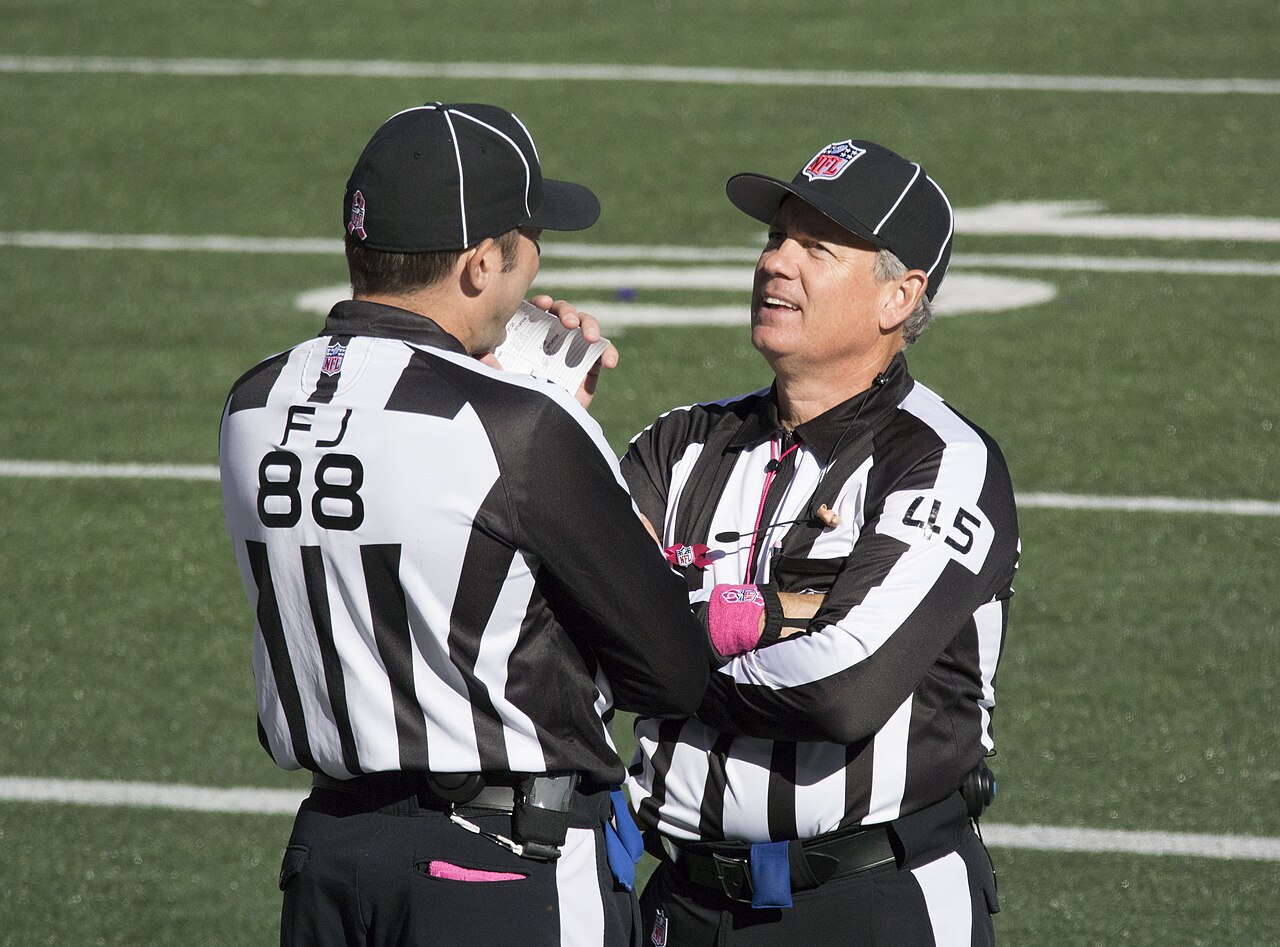
The Unsung Heroes of the Gridiron: Who Are They?
In the high-stakes, fast-paced world of gridiron football, every snap, every tackle, and every touchdown is governed by a meticulous set of rules. Ensuring these rules are upheld and the game proceeds fairly falls squarely on the shoulders of dedicated game administrators – the officials. Often collectively, and somewhat inaccurately, referred to simply as "referees," these individuals are, in fact, a specialized team, each with distinct responsibilities and a unique vantage point on the field. Their role extends far beyond merely blowing a whistle; they are the guardians of the game's integrity, ensuring order and safety amidst the thrilling chaos.
The referee, while being the lead member and crew chief of the officiating team, is just one position among several vital roles. This critical distinction highlights the collaborative nature of officiating, where each official contributes to a comprehensive oversight of the game. From tracking player movement to identifying subtle infractions, their collective vigilance is paramount to the spirit and fairness of football.
A Symphony of Seven (or Eight): The Official Lineup
The number of officials present on the field can vary significantly depending on the league and level of play, reflecting the diverse complexities and demands of different football environments. In professional leagues like the NFL and most major college football games, a standard crew of seven officials operates simultaneously, each meticulously observing a specific area of the field. However, some leagues and levels have evolved their systems to include even more eyes on the action. For instance, since 2015, NCAA Division I college football conferences have frequently utilized eight game officials. Similarly, the short-lived Alliance of American Football (AAF) in 2019 and the XFL in 2020 also adopted an eight-official system, recognizing the benefit of additional coverage in a game that continues to increase in speed and complexity.
Lower levels of football also adapt their officiating crews accordingly. College games outside of Division I typically employ six or seven officials, while arena football and high school games often use fewer than the standard seven. High school football, played under National Federation of State High School Associations (NFHS) rules, commonly fields five officials for varsity games, and three, four, or five for non-varsity contests. This flexibility ensures appropriate oversight without over-resourcing games where the pace or stakes might be different.
Each official position is critical and comes with specific duties:
- Referee: The crew chief and general supervisor of the game. They are primarily responsible for fouls involving the quarterback and offensive holding, and they announce penalties.
- Umpire: Positioned in the defensive backfield (or sometimes behind the offensive line), they focus on offensive and defensive line play, holding infractions, and legality of equipment.
- Head Linesman (or Down Judge): Works along one sideline, responsible for the line of scrimmage, offside, illegal motion, and administering the chain crew for first downs.
- Line Judge: Positioned on the opposite sideline from the Head Linesman, they have similar responsibilities regarding the line of scrimmage and offside, and also monitor legal passes and timing.
- Field Judge (or Back Umpire): Positioned deep downfield on one side, responsible for timing the play clock, covering passes, and spotting fouls in their area, particularly regarding receivers and defensive backs.
- Side Judge: Positioned deep downfield on the opposite side from the Field Judge, with duties similar to the Field Judge, including managing the game clock.
- Back Judge: Positioned deepest in the defensive backfield, they are responsible for timing the play clock (if not the Field Judge), covering deep passes, goal-line plays, and ensuring player safety in their zone.
- Center Judge: An eighth official, often used in higher-level college games, typically positioned in the offensive backfield opposite the Referee. They assist with ball spotting, monitoring illegal substitutions, and providing an additional perspective on offensive line play. The CFL even experimented with an unnamed eighth official during its 2018 playoffs specifically to watch for head contact with the quarterback, underscoring the constant evolution of officiating to enhance player safety.
Beyond the Whistle: Essential Tools of the Trade
While their keen eyesight, deep understanding of the rulebook, and sharp judgment are their primary assets, officials also rely on a few essential tools to perform their duties effectively and communicate decisions to players, coaches, and fans.
- The Whistle: The most recognizable tool, the whistle is used to signal the ball is dead—meaning the play has ended or never began. Its sharp, distinct sound cuts through crowd noise, immediately conveying to all participants that action should cease.
- The Penalty Flag: This iconic bright-yellow flag is the universal symbol of a foul on the field. Thrown by an official towards or at the approximate spot of the infraction, it alerts everyone that a penalty has occurred. For fouls where the precise spot isn't crucial (e.g., false start or dead ball fouls), the flag might be thrown vertically. Officials often carry a second flag as a backup in case multiple fouls occur on a single play. Should they run out, it's not uncommon for an official to drop their hat or even a bean bag to mark an additional foul. These flags are typically weighted with sand or beans to ensure they can be thrown with accuracy and remain in place, though historical incidents involving heavier weights like ball bearings led to discouragement due to potential player injury. (Note: While most leagues use yellow, Canadian amateur football officials traditionally used orange, though the CFL switched to yellow flags in 2022).
- The Bean Bag: Unlike the penalty flag, a bean bag is used to mark various spots on the field that are *not* fouls but are crucial for potential penalty enforcement or for identifying specific game situations. For example, a bean bag might mark the spot where a player fumbled the ball or where a punt was caught. They are typically colored white, blue, black, or orange, with the specific color often varying by league, college conference, or even weather conditions. Crucially, they are tossed to a spot parallel to the sideline to aid in precise measurement and rule application.
The Future of Officiating: Enter the Official Droid?
The modern gridiron game is an intricate ballet of athleticism and strategy, demanding split-second decisions from officials. As technology continues its relentless march, enhancing nearly every aspect of our lives – from how we
Transform Your TV: Upgrade Traditional Screens to Smart Hubs to how we manage our digital storage – it's natural to ponder its potential impact on officiating. Could the concept of an "Official Droid" system, or advanced technological assistants, be the next frontier for gridiron game officials?
Imagine an "Official Droid" not as a robot on the field, but as a sophisticated, integrated technological ecosystem designed to augment human officials. Drawing inspiration from the advancements in "smart" devices and interactive experiences, such a system could offer unprecedented levels of precision and real-time data.
Think about these potential features:
- Enhanced Vision and Tracking: High-speed cameras integrated with AI could offer super slow-motion, multi-angle replays automatically tagged with potential infractions. An "Official Droid" system could track ball trajectory, player-to-player contact points, and offside lines with millisecond accuracy, providing instant, objective data that aids human judgment without replacing it.
- Real-time Data Processing: Officials are constantly absorbing information. An "Official Droid" system could process vast amounts of game data – player movements, historical tendencies, rule interpretations – and present relevant insights to officials through discreet wearable tech (e.g., smart glasses or earpieces). This could be akin to having an instant digital assistant, managing complex data storage and retrieval for every play.
- Instant, Secure Communication: Communication among the officiating crew is vital. An "Official Droid" system could facilitate secure, lag-free communication channels, ensuring all officials are instantly updated on calls, challenges, and game situations, much like a highly specialized, always-on communication network. Just as we troubleshoot to prevent Lag-Free Streaming: Troubleshoot Your TV Box Freezing Issues for entertainment, a system for officials would prioritize absolute reliability and speed.
- AI-Assisted Rule Interpretation: While human judgment is irreplaceable, AI could flag unusual patterns or potential rule violations based on learned behaviors and rulebook parameters, prompting officials to review specific moments more closely.
- Automated Measurement: First downs, goal-line stands, and penalty yardage could be measured with unparalleled digital precision, eliminating human error from crucial yardage calls.
Of course, integrating such an "Official Droid" system would come with challenges, including maintaining the human element of judgment, ensuring system reliability, and preventing technological "glitches" during critical moments. Yet, the potential for enhancing fairness, safety, and accuracy on the gridiron is undeniable, ensuring the game continues to evolve alongside technology.
Why Precision Matters: The Impact of Good Officiating
The decisions made by game officials directly impact the outcome of a contest, player safety, and the overall fan experience. A single missed call or incorrect interpretation can swing momentum, determine playoff berths, or even spark significant controversy. The pressure on these individuals is immense; they must be physically fit, mentally sharp, and possess an encyclopedic knowledge of the rulebook, all while making critical decisions in fractions of a second under the scrutiny of millions.
Good officiating ensures that games are decided by the athletes' skill and strategy, rather than by human error. It fosters a sense of fairness and respect for the game, reinforcing the idea that rules are applied impartially to all teams. For fans, understanding the intricate roles and responsibilities of each official can significantly deepen their appreciation for the game, recognizing the silent, vital work these unsung heroes perform every week.
In conclusion, gridiron game officials are indispensable to the sport, serving as the critical enforcers of rules and maintainers of order. Their precise roles, varying numbers across different leagues, and reliance on essential tools like whistles, penalty flags, and bean bags underscore the complexity of their craft. As football continues to evolve, the integration of advanced concepts, perhaps even an "Official Droid" system that leverages smart technology and real-time data, holds the promise of further enhancing the accuracy, fairness, and safety of the gridiron game, solidifying the officials' role at the heart of the action.